
Buying a lathe machine is one of the biggest decisions a workshop owner or production manager makes. Get it right, and the machine runs for decades without complaint. Get it wrong, and you spend years fighting limitations that could have been avoided on day one.
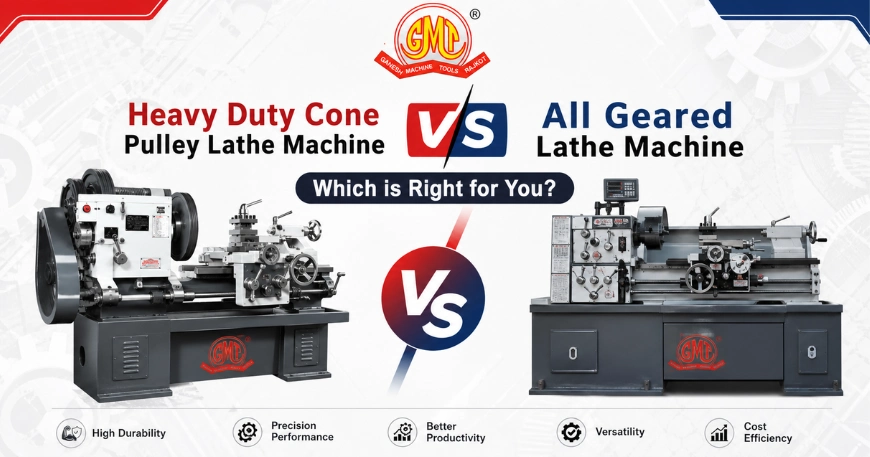
The two most common types you’ll come across from any reputable heavy-duty cone pulley lathe machine manufacturer in Rajkot are – the cone pulley lathe and the all geared lathe. Both are built for metal cutting and turning operations, but they are designed with completely different users in mind.
This comparison breaks down how each machine actually works, where each one shines, and which one makes sense for the kind of work sitting on your shop floor right now.
How a Cone Pulley Lathe Machine Works
The name tells you most of it. A cone pulley lathe uses a stepped pulley system – usually three to four steps – connected by a belt to transmit power from the motor to the spindle. To change spindle speed, you physically shift the belt from one step of the cone to another.
This is a manual process, yes. But that simplicity is actually the machine’s greatest strength. There are fewer moving parts inside the headstock, which means less heat, less wear, and a significantly lower chance of mechanical failure during heavy or continuous use.
The heavy duty variant of this machine takes that basic design and reinforces it throughout – induction hardened bed guideways, double back gear systems, double V-belt arrangements for higher torque, and heavy cast iron legs that keep vibration away from the workpiece.
Where this machine truly holds its own is in high-torque, low-speed operations. Think of rolling large shafts, working with tough ferrous materials, or situations in oil country equipment shops where consistent rotational force matters more than speed variety.
How an All Geared Lathe Machine Works
An all geared lathe eliminates the belt-and-pulley system entirely from the spindle drive. Inside the headstock sits a series of precision gear trains that allow the operator to select speed ranges using levers – no belt shifting, no stopping the machine.
This gives the all geared lathe a much wider speed range and faster transition between cuts. A well-built all geared lathe can offer anywhere from 8 to 16 distinct spindle speeds across a broad RPM band, making it possible to switch from roughing to finishing within the same setup.
The trade-off is complexity. More gears mean more potential points of wear, more lubrication requirements, and a higher base cost compared to a cone pulley machine of the same size. The all geared lathe also demands more attention to maintenance intervals to keep the gear train running quietly and accurately.
That said, for precision tool room applications, threading work, and jobs requiring frequent speed changes, the all geared lathe is the natural fit.
Where the Cone Pulley Lathe Pulls Ahead
High Torque at Low Cost
The heavy-duty cone pulley lathe machine produces impressive torque at low spindle speeds because the double back gear system multiplies the drive force considerably. This makes it well-suited for turning large diameter workpieces, heavy shafts, or cast-iron components where the cutting load is high and consistent.
For workshops in industries like sugar mills, paper mills, power plants, or heavy fabrication shops, this torque capability at an accessible price point is exactly what the job demands.
Maintenance Simplicity
A belt wears out and costs a fraction of what a gear replacement does. When something goes wrong with a cone pulley drive system, the fix is usually straightforward – tighten, adjust, or replace the belt. A skilled operator can often handle this without calling in outside service.
That low maintenance demand makes the cone pulley lathe a practical choice for workshops in smaller towns or regions where specialized service support is not always close at hand.
Cost Efficiency Over the Long Run
The initial purchase price of a cone pulley lathe is noticeably lower than an all geared machine of comparable size and capacity. Over the lifespan of the machine – often 15 to 25 years with proper care – the total cost of ownership remains low because the mechanical design does not demand costly interventions.
Any light duty cone pulley lathe machines manufacturer in Rajkot will tell you the same story – for general maintenance shops, repair workshops, and institutions like ITIs or engineering colleges, the cone pulley lathe delivers real value without unnecessary complexity.
Where the All Geared Lathe Pulls Ahead
Precision Threading and Fine Feeds
The all geared lathe machine connects its feed mechanism directly to the gear train, giving the operator precise control over thread pitches and feed rates. For tool rooms producing dies, precision shafts, or components with strict dimensional tolerances, this level of control is not optional – it is the whole point.
When your work involves cutting 44 different thread types across both metric and inch ranges within a single shift, stopping to move a belt between cuts is simply not practical.
Faster Production in Mixed-Work Environments
Automotive workshops, pump and valve manufacturers, and general engineering units deal with a variety of job sizes and materials every day. The all geared lathe’s ability to switch speeds quickly without any physical adjustment keeps the workflow moving.
For production environments where the machine needs to handle five different jobs in a day – each with a different material and diameter – that speed flexibility adds up to real time savings.
Higher RPM for Finishing Work
The all geared lathe typically reaches higher maximum spindle speeds than a cone pulley machine, which opens the door to high-speed finishing cuts on softer materials like aluminium and brass. Achieving a fine surface finish on a precision turned component is far easier when you have the right RPM available without compromise.
Comparing the Two Side by Side
The cone pulley lathe is built for reliability, torque, and affordability. It suits workshops where the jobs are heavier, the materials are tougher, and the maintenance budget is lean. It is a workhorse in the truest sense – not flashy, but dependable.
The all geared lathe is built for versatility, precision, and speed range. It suits production shops, tool rooms, and any environment where the work changes often and the operator needs to respond quickly without interrupting the job.
Neither machine is universally better than the other. The right choice depends entirely on what your work looks like on a typical day – not what it looks like on your best or worst day.
If most of your jobs involve large workpieces, tough materials, and long turning runs at low to medium speeds, the heavy-duty cone pulley lathe is genuinely the smarter buy. If your shop handles varied, precision-critical work with frequent speed changes, the all geared lathe earns its higher price.
What to Check Before You Decide
Before placing an order with any manufacturer, ask yourself three questions. First – what is the average diameter and length of the workpieces you turn most often? This determines the swing and bed length you actually need. Second – how often do you change spindle speed during a typical job? If the answer is rarely, the cone pulley system will never frustrate you. If the answer is constantly, you will feel every belt shift.
Third – what is your realistic maintenance capacity? A workshop with a dedicated maintenance team can comfortably handle an all geared lathe. A smaller operation without that support will thank itself for choosing the simpler cone pulley design.
Getting answers to these three questions takes ten minutes and will save you from years of regret.
Making the Final Call
Both machines are available in light, medium, and heavy-duty variants – and the duty rating matters just as much as the drive type. A heavy-duty frame absorbs cutting loads without flexing, protects dimensional accuracy over time, and simply lasts longer in industrial conditions.
Whether you are sourcing from a heavy-duty cone pulley lathe machine manufacturer in Rajkot or exploring all geared options from the same region, make sure the manufacturer can show you machines currently running in industrial settings – not just showroom samples.
Rajkot has been producing lathe machines for generations, and the best manufacturers here understand that a machine sold well is a machine that runs well in your specific application. Ask the right questions, compare specifications against your actual workload, and the right machine will be obvious.