
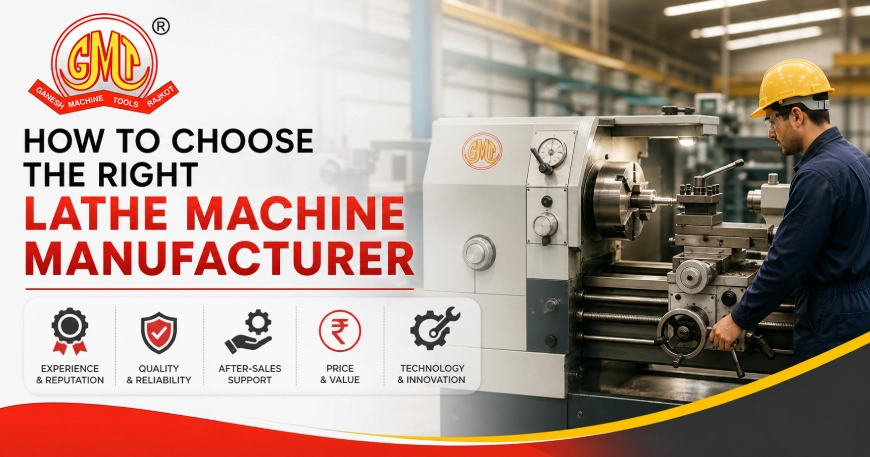
Picking a lathe machine manufacturer usually starts with a spec sheet and ends with a decision that shapes a shop’s output for the next fifteen years. The wrong match doesn’t always show up as a broken machine – more often it shows up as a lathe that technically works but was never built for the material, batch size, or tolerance the shop actually runs. This guide walks through how to line up manufacturer strengths with real industry needs instead of buying on price alone.
The right lathe machine manufacturer for a given shop depends on production volume, material hardness, and part size rather than brand reputation alone. A high-mix automotive shop needs fast changeover and reliable accessories, while an oil and gas fabricator needs a heavier bed and larger spindle bore. Matching those specifics first narrows the manufacturer list far faster than comparing prices.
Why Industry Needs Should Drive the Manufacturer Choice
Every industry puts a different kind of stress on a lathe, and that stress should shape the shortlist before a single quote gets requested. A job shop running short batches of aluminum brackets needs quick tool changes and moderate rigidity, while a shop machining forged steel flanges for pressure vessels needs a bed that resists deflection under sustained heavy cuts.
Tolerance requirements matter just as much as material. Aerospace and medical component work often demands repeatability within a few microns, which rules out manufacturers whose standard line tops out at general-purpose precision, no matter how competitive their pricing looks on paper.
Batch size changes the calculation again. A manufacturer specializing in single-spindle conventional lathes serves low-volume job shops well, but a shop running thousands of identical parts a month gets far more value from a manufacturer whose CNC line includes bar feeders and automated part handling as standard options.
Regulatory and industry certification requirements add a layer that’s easy to overlook during early shortlisting. Shops supplying automotive or defence contractors often need suppliers whose equipment and quality processes align with specific certifications, which can eliminate otherwise strong manufacturers from contention before price ever enters the conversation.
How Do You Match a Lathe Machine Manufacturer to Your Production Volume?
Low-volume, high-mix shops benefit most from manufacturers who build flexible, manually operated or semi-automatic lathes rather than dedicated CNC lines optimized for one part running for months at a stretch. Setup speed and operator accessibility matter more here than raw cycle time, since the machine changes jobs several times a day.
Mid-volume manufacturers, the kind running a defined set of parts on a repeating schedule, usually land best with a manufacturer offering all-geared heavy duty lathe machines paired with programmable digital readouts. That combination holds tolerance across repeat runs without the full cost of a CNC investment.
High-volume production, the kind found in automotive component supply chains, typically needs a manufacturer with a genuine CNC turning line and documented cycle-time data for comparable parts. Asking for a reference customer running similar volume tells a buyer more in ten minutes than a spec sheet tells them in a week.
Heavy Duty Lathe Machines vs. Standard Models: Which Fits Your Shop?
Standard lathes handle general machining work on mild steel, aluminum, and other easily worked materials without needing the extra rigidity that heavy duty construction adds. Shops working almost exclusively with these materials in parts under 300mm diameter rarely see a return on paying for a heavier-rated machine.
Heavy duty lathe machines earn their price when the work involves hardened alloys, large-diameter shafts, or continuous production runs that would wear a lighter machine down within a few years. A manufacturer that builds both lines honestly, rather than labeling everything “heavy duty” regardless of actual bed thickness and spindle bore, is worth paying a premium for.
The table below breaks down which class typically fits which kind of shop:
| Shop Type | Typical Material | Recommended Class |
| General job shop, mixed small parts | Aluminum, mild steel | Standard or medium duty lathe |
| Automotive or component supplier | Steel, cast iron, alloys | Heavy duty, CNC-capable |
| Heavy engineering, oil and gas, forging | Hardened alloys, large shafts | Heavy duty or extra heavy duty |
Lathe Accessories and Parts of Lathe Machine Support Worth Checking
A manufacturer’s accessory catalog says almost as much about their production philosophy as the machine itself. Shops that need quick job changes should confirm availability of quick-change tool posts, multiple chuck sizes, and steady rests before finalizing an order, since sourcing these separately after purchase often means fitment problems down the line.
Spare parts of lathe machine components, particularly spindle bearings, drive belts, and gearbox parts, should be available through the manufacturer or an authorized dealer network rather than only through the original factory. A manufacturer without a documented parts supply chain can leave a shop waiting weeks for a bearing that should take days to replace.
Warranty coverage on accessories separately from the base machine is a detail many buyers skip past. Manufacturers, [Your Brand] included, who back their tool posts and chucks with the same warranty confidence as the spindle are signaling that the whole package, not just the headline machine, was built to hold up under real production.
What Questions Separate a Reliable Manufacturer from a Risky One?
Requesting a live demonstration under load, rather than a static walkaround, reveals problems a spec sheet never mentions. Vibration, unusual noise, or drift during an actual cutting pass tells a buyer more about build quality in five minutes than a brochure tells them in an hour.
Asking how long the manufacturer has produced the specific machine class being quoted matters more than asking how long the company has existed overall. A firm with decades in light bench lathes that recently added a heavy duty line hasn’t necessarily built the engineering depth that a specialist manufacturer, [Your Brand] for example, has in that specific class.
Checking service response time before the sale, not after, avoids the most common regret buyers report. A manufacturer who can commit to a service technician on-site within 48 hours for a critical breakdown is worth more to a production shop than one offering a marginally lower price with no service guarantee attached.
Payment and delivery terms round out the due diligence most buyers rush through. A manufacturer willing to tie a portion of payment to successful installation and commissioning, rather than requiring full payment on shipment, is taking on shared risk in a way that signals confidence in their own build quality.
Frequently Asked Questions
What’s the most important factor in choosing a lathe machine manufacturer?
Matching the manufacturer’s build class to the actual material and production volume a shop runs matters more than brand name or price alone. A machine rated for the wrong workload wears out early regardless of how well-known the manufacturer is.
Should I buy heavy duty lathe machines even if my current work doesn’t need them?
Only if growth plans realistically point toward heavier materials or larger parts within the next few years, since the extra rigidity carries a real cost premium. Buying capacity a shop won’t use for half a decade ties up capital that could go toward other equipment.
How do I know if a manufacturer’s lathe accessories are good quality?
Ask for the accessory warranty terms separately from the machine warranty and request specifications on the tool post and chuck materials used. Manufacturers confident in their accessories rarely hesitate to put that confidence in writing.
What parts of lathe machine fail most often and need reliable supply?
Spindle bearings, drive belts, and gearbox components see the most wear under regular production use and should have a documented local or regional supply chain. A manufacturer without ready access to these parts creates avoidable downtime risk.
Is a more expensive lathe machine manufacturer always the safer choice?
Not necessarily, since price often reflects brand overhead and service network size rather than casting quality alone. Comparing warranty terms, service response commitments, and reference customers gives a clearer picture than price positioning by itself.
A shortlist built around actual material, batch size, and tolerance requirements will outperform one built around brand recognition almost every time. Walk into the next quote conversation with those three numbers already defined, and ask each lathe machine manufacturer to explain how their specific machine class addresses each one rather than accepting a general pitch. The answer to that question, more than anything on a spec sheet, shows whether the fit is real.
That conversation also tends to expose which manufacturers actually know their own equipment. A sales rep who can speak precisely about spindle bore tolerances, bearing types, or accessory compatibility for the shop’s exact use case has earned the follow-up call; one who defaults to generic reassurances hasn’t.